
Comparison · build decision
Drink the Ocean: Mana vs Playgama
Two official pages, two different games under one title. Compare the decision points before borrowing controls or prices from either.
Choose Mana for desktop co-op: one to four players, keyboard and mouse, and treasure sold to a merchant for stronger straws. Choose Playgama for a one-player release listed on PC, Android and iOS, with water pressed into salt and spent at a shop. Controls, saves and prices are build-specific; no official page says progress transfers between them.
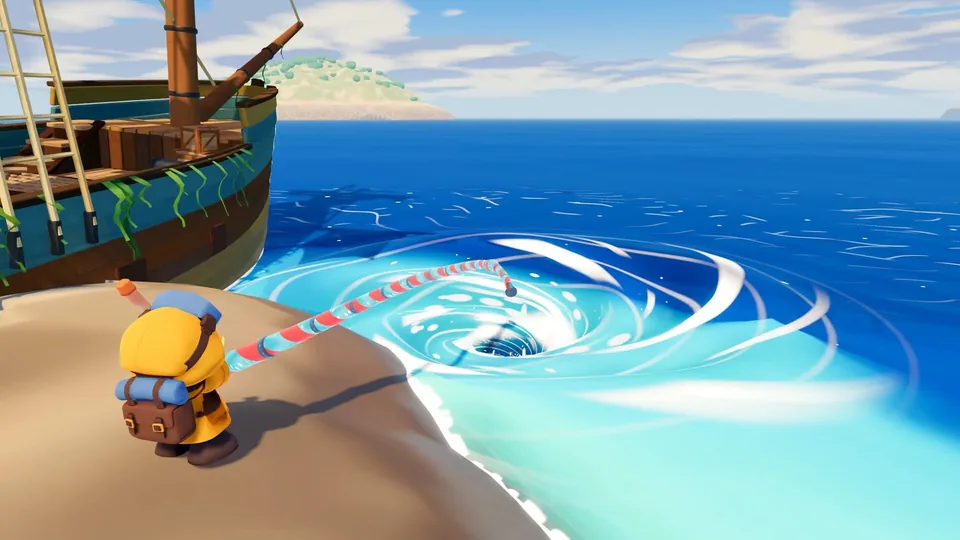
Compare on the points that change your session
| Decision | Mana | Playgama |
|---|---|---|
| Where it runs | Desktop browser only | PC, Android and iOS listing, landscape |
| Players | Co-op 1–4 | 1 player |
| Input | Keyboard and mouse | Keyboard, mouse and phone touch |
| Upgrade currency | Treasure sold to the merchant | Water pressed into salt at the PRESS |
| Published shop upgrades | Bigger, stronger straws | Bigger belly, extra straws, mouth vacuum, pocket whirlpool |
| Named landmarks | Shipwreck and what is below it | Shipwreck, whale skeleton, sunken city, plug |
| End state | Not documented on the page | Pull the plug for cola, lemonade, slime or lava |
| Save information | No save instructions on the page | “Save the progress” field reads No |
| Interface languages | Not listed | 16 listed |
| Progress transfer | No evidence | No evidence |
Why the two pages do not describe the same session
The Mana page describes a co-op first-person game in which the seabed dries and treasure pays a merchant. The Playgama page describes a one-player salt economy with a shop on the beach and a plug at the bottom. Those are different numbers of players and different ways to turn progress into upgrades.
A third-party comparison calls Mana a separate co-op original and Playgama the browser release. That is a third-party description, not an official statement. Neither official page names the other, so the exact production relationship stays open.
Pick by the session you actually want
Start with the device and the people, then check the economy. The game title alone does not tell you which page to open.
- Solo on a phone: Playgama. It lists Android and iOS and a hold-to-drink control. Mana tells phone visitors to use a computer.
- Two to four people on desktop: Mana. Its page lists co-op for one to four players. Playgama lists one player.
- You want the salt-and-PRESS loop: Playgama. That economy is written on its page, not on Mana’s.
- You want the treasure-and-merchant loop: Mana. Its page describes selling seabed treasure for bigger straws.
- You need recorded prices to plan a run: neither page publishes a price list. The figures in our upgrades page are single-run observations from a Mana recording, not current shop prices.
A Playgama key table is not automatically a Mana key table, a Mana co-op player count is not a Playgama feature, and a save claim from one host does not describe the other. Before following a guide, match the build name at the top of the page to the page you have open.
If a source does not name the build, treat it as unclassified. Our pages name the build or mark the claim as unresolved.
Mana vs Playgama questions
- 01Which build is the “original”?
- Mana calls its game a co-op original in third-party descriptions; Playgama credits Pinidi Studio and gives a November 2026 release. No official page states which build came first, so we do not rank them by origin.
- 02Can I move progress between them?
- No official page describes a transfer, account link or shared save. Assume progress stays with the build and browser where you made it.
- 03Which one has more content?
- The listings advertise different landmarks and endings, but neither publishes a content count. We cannot turn page copy into a reliable “more content” verdict.
- 04Which has co-op?
- Mana lists co-op for one to four players. Playgama lists one player.